Sizes and prices
What solar actually costs in Parramatta
Our starting prices, what each size suits, and the five things that move the number. No form to fill in to see a price.
from
$4,500
6.6kW solar
from
$8,500
10kW solar
from
$12,900
10kW solar + 20kWh battery
from
$8,500
10kWh battery
Starting prices include GST and standard installation, after the government incentives you qualify for. Your final price is confirmed in writing after a site assessment.
Work it out now
Work out your size before you read the table.
Three questions off your last bill. No email, no phone number, no waiting for someone to call you back. A system too big is money you never get back, and one too small is a bill you keep paying.
Your starting point
6.6kW solar + 10kWh battery
Some of it lands in daylight and some after dark, so the panels take the day and the battery carries the evening.
- Roughly what you use a day
- 17 kWh
- 6.6kW solar
- from $4,500
- 10kWh battery
- from $8,500
Two separate lines, priced separately. A combined price comes back with your quote.
Get this priced for your roofAn estimate from your bill, not a quote. It assumes about 35c a kilowatt hour, a $1.10 daily supply charge and 4 kWh a day from every kW of panels, which is ordinary for Sydney but not exact for your roof. We read twelve months of your actual usage before recommending anything.
Starting prices include GST and standard installation, after the government incentives you qualify for. Your final price is confirmed in writing after a site assessment.
| System | From | Roughly suits |
|---|---|---|
| 6.6kW solar | $4,500 | Smaller household, no ducted cooling, no EV |
| 10kW solar | $8,500 | Ducted air conditioning, a pool, or an EV coming |
| 10kW solar + 20kWh battery | $12,900 | Most power used after dark, wants backup |
| 10kWh battery | $8,500 | Retrofit to cover an evening peak |
| 20kWh battery | $9,900 | Larger household, most of a day of storage |
| 30kWh battery | $12,990 | High use, an EV, real outage backup |
The five things that move the price
- Two storeys instead of one, which changes access and labour
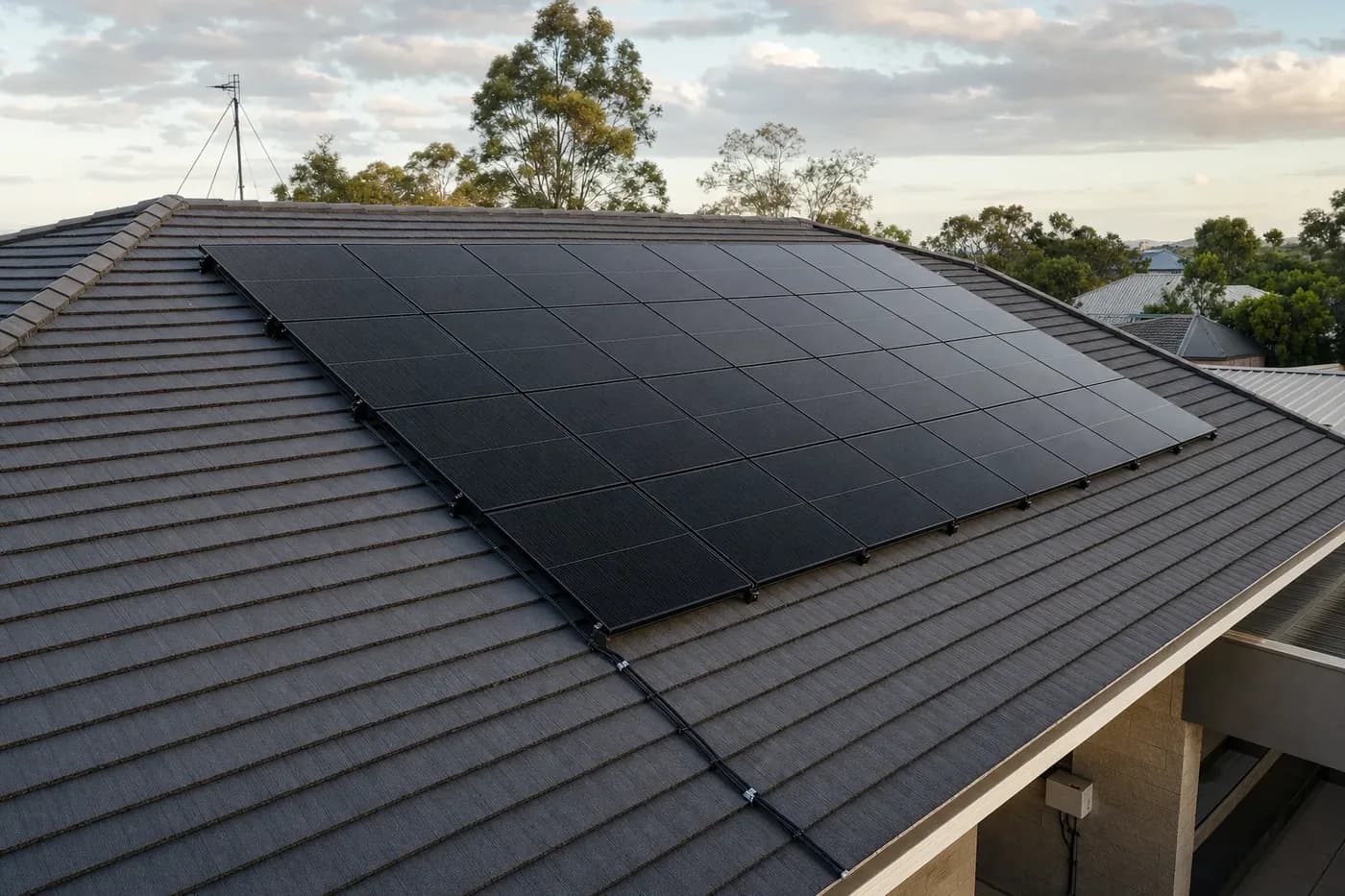
- Tile rather than sheet metal, which is slower to mount on
- A switchboard or meter that needs upgrading first
- An array split across three or four faces instead of one
- A roof that needs repair before anything is fixed to it
Most of the cost of a solar install is getting a crew to your roof. The panels are the part that scales.
Once you know roughly which size you are in, the next question is how it gets sized properly against your own roof and usage. That is what the design step does.
Before you book
Sizing and pricing questions
The ones that come up on nearly every first call, answered straight.
Not on the list? Call 1300 958 778 or send it through.
Is a 6.6kW system big enough?
For a smaller household without ducted air conditioning or a pool, usually yes. It is the most common residential size in Australia for a reason. If you run ducted cooling through a Western Sydney summer, or you have an EV coming, 10kW is the honest answer.
Why is 10kW not double the price of 6.6kW?
Because a lot of the cost is fixed. The trip, the scaffold or roof access, the switchboard work, the paperwork and the commissioning are much the same whichever size goes on. The panels themselves are the part that scales.
What size battery should I get?
It follows from how much power you use after dark rather than from your solar size. Read your daily average off a bill, work out roughly how much of it happens at night, and size to cover that. 10kWh covers an evening peak and overnight base load for most households.
Are these prices after the rebate?
They are our published starting prices for a standard single-storey install. Your quote sets out the incentive you qualify for separately and against the rules on the day, because those change and a figure from a brochure is worth nothing.
Get the number for your own roof.
Send the address and roughly what your quarterly bill runs to. You get a system size, a price and a payback figure in writing, before you commit to anything.